
Services
+91 70126 68312
What We Do
Between aluminium and glass, there’s a fairly wide range of work that falls under “our services” – some of it structural, some of it purely about how a space looks and functions day to day. Below is what we handle regularly, but if your project doesn’t fit neatly into one of these categories, it’s still worth a call.
We install glass windows, doors, partitions, balustrades, and shopfronts, and we handle installation, repair, and maintenance of aluminium doors and windows for residential, commercial, and industrial properties.
All kinds of aluminium and glass work – one team, start to finish
Entry doors, interior doors, sliding and casement styles – fitted with attention to how the door will actually get used, not just how it looks the day it’s installed. We fit multi-point locking where security matters, and finish frames in powder coat, anodised, or wood-finish so they match the rest of the building rather than looking bolted on. In Kerala’s climate, that also means paying attention to how the hardware and finish hold up against humidity and salt air over time.
Sliding, casement, and fixed aluminium window systems built for natural light and airflow, with framing that stays slim without giving up strength. We size and specify each installation to the opening rather than working off a standard template, and can fit insect mesh shutters alongside sliding units where clients want to keep windows open without letting mosquitoes in.
Frameless glass doors fitted with patch hardware – a clean, minimal look that works well for office entrances, showrooms, and modern home interiors where a bulky frame would look out of place.
Custom glass shower enclosures, measured and cut to fit your bathroom exactly, with watertight sealing so it stays that way.
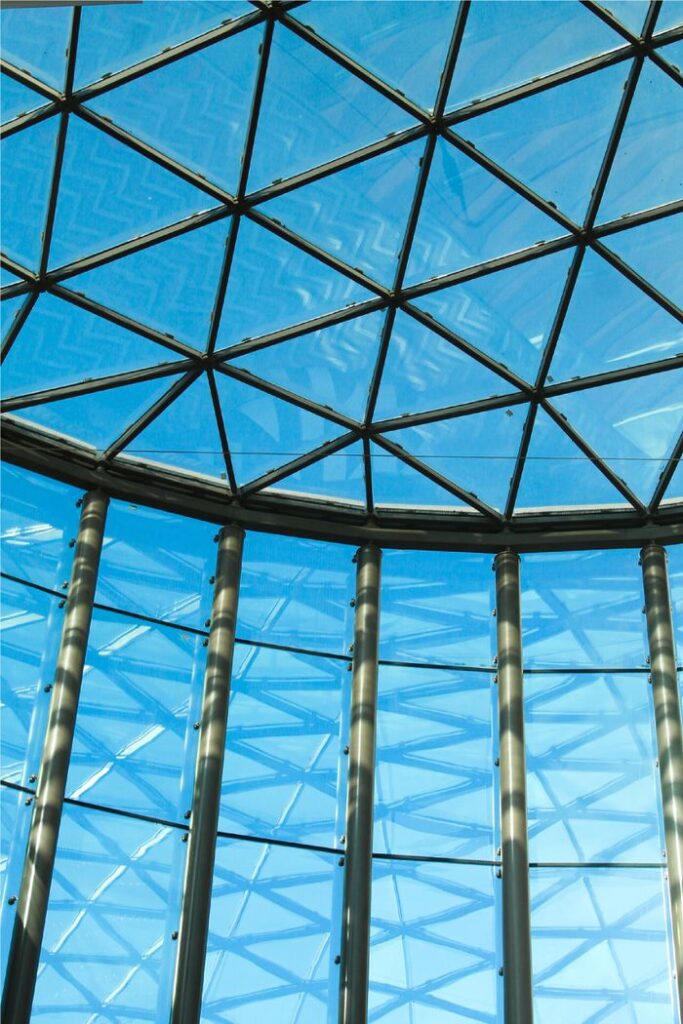
Our specialty. Spyder (spider) glazing uses stainless steel point-fixings instead of a visible frame, which is what gives building facades that seamless, uninterrupted glass look. It’s typically done with toughened glass around 12mm thick, engineered to handle wind load – which matters in Kerala, where monsoon winds are part of the design brief, not an afterthought.
Facades, partitions, balustrades, and shopfronts – full glazing solutions scaled to the project, whether that’s a single shop front or a full building elevation.
Aluminium Composite Panel (ACP) cladding is a lightweight external finish made of two thin aluminium sheets bonded to a core layer – used to give building exteriors a clean, modern finish while adding a protective skin against weather. It’s a natural pairing with glazing work on commercial facades and shopfronts.
Glass balustrades and handrails for staircases, balconies, and terraces – a clean, minimal safety barrier that doesn’t block the view the way a solid rail does. Fitted with either a base-mounted or side-mounted system depending on the structure.
Frequently Asked Questions
Regular glazing holds glass inside a visible aluminium frame. Spyder glazing uses stainless steel point-fixings (“spiders”) bolted directly to the glass instead, so there’s no frame in the way – just a clean, continuous glass surface. It’s mostly used on building facades and large entrances where the frameless look matters.
Honestly, it depends on what you’re optimizing for. Aluminium holds up better in coastal, high-humidity, high-wind conditions and allows for slimmer frames and larger glass panels – which is why it’s common on apartment towers and modern homes here. UPVC insulates better against heat and sound and needs less upkeep, but the frames are bulkier and don’t suit larger openings as well. For Kerala’s climate specifically, well-finished aluminium (powder-coated or anodized) tends to be the more durable long-term choice, which is why it’s what we specialize in – but we’ll tell you honestly if a particular opening or budget suits UPVC better.
Depends entirely on scope. A shower partition or a couple of doors can be done in a day. A full apartment’s worth of windows might take a week. Facade-level Spyder glazing on a commercial building is a longer, phased job. We’ll give you a realistic timeline once we’ve seen the site.
Yes – we’ve completed and are currently working on projects in Chennai as well as across Kerala. Get in touch with your location and we’ll confirm feasibility.
Typically 12mm toughened glass, which is the industry standard for point-fixed facade glazing, though the exact spec depends on panel size, height, and wind load calculations for your specific site.
Yes, when it’s specified and installed correctly. The stainless steel fittings resist corrosion, the glass is toughened for impact resistance, and silicone sealants keep the joints watertight. The weak point in any glazing system is usually poor installation, not the materials themselves – which is where experienced fitting matters
Both. A lot of our work is new installation, but we also repair and service existing aluminium doors, windows, and glazing – stuck sliders, failed seals, cracked patch fittings, that sort of thing.
It comes down to material, glass type and thickness, design complexity, and the size of the job – there isn’t a single flat rate that applies across doors, windows, and facade glazing. The most accurate way to get a number is a quick site visit or a few photos and measurements, after which we’ll give you a clear quote.
Yes – a mesh shutter fitted alongside a sliding or hinged aluminium frame lets you keep the opening open for airflow without insects getting in. Commonly paired with balcony and patio sliding doors.
Standard aluminium sections are a single piece of metal, which conducts heat easily. Thermally insulated (or “thermal break”) sections have a non-conductive barrier built into the profile, which cuts down heat transfer and can reduce indoor cooling load – useful for west-facing rooms or top-floor units that heat up fast. It costs more than standard sections, so it’s worth discussing whether it’s needed for your specific opening.
Yes – aluminium’s strength-to-weight ratio and low maintenance make it a common choice for shopfronts, office glass doors, and industrial units as well as residential work. Scale and specification change, but the fabrication process is the same.